
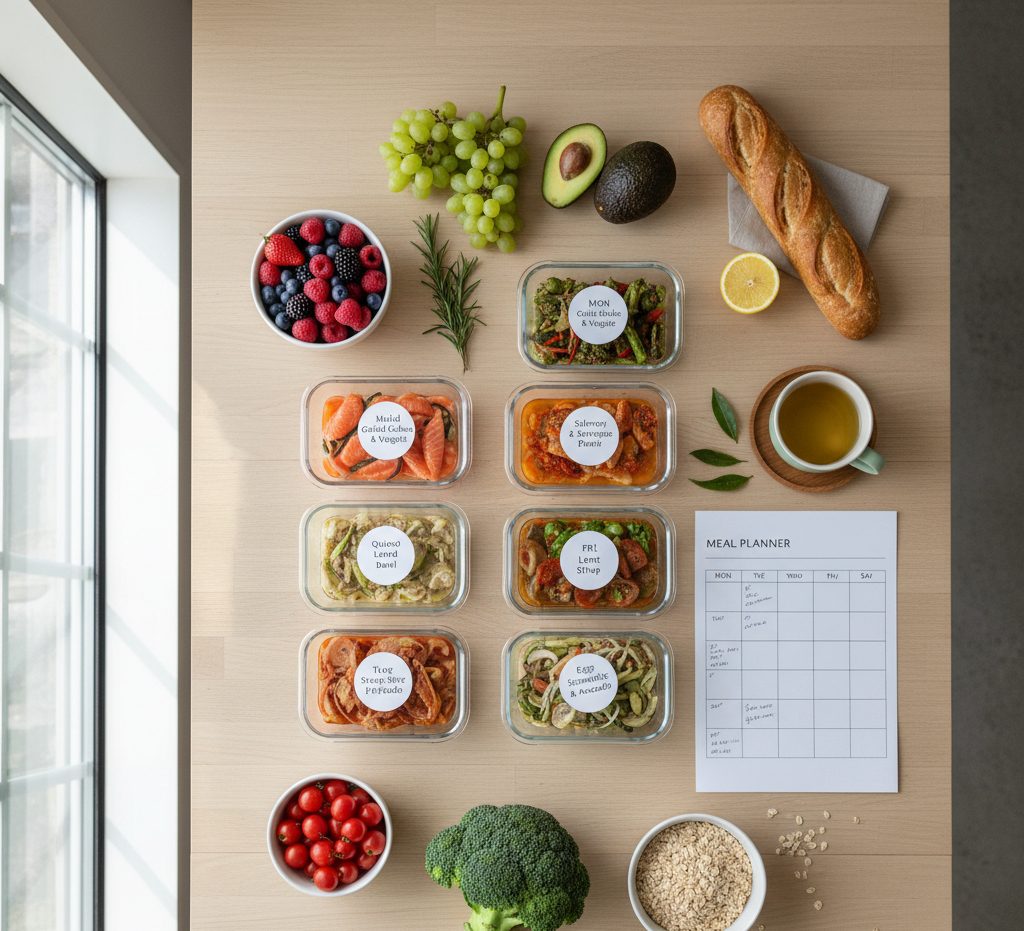
Create your ideal 7 day nutrition plan with this easy, balanced diet plan for weight loss. Get meal planning, a grocery shopping list, and nutrition tips today. For tracking, try the free BMI Calculator, Nutrition Tracker
, or the ready-made 7 Day Plan tools on NutriFitCalc.Why a 7 Day Nutrition Plan Makes All the Difference
Have you ever felt stuck in front of the fridge, wondering what to eat, or grabbed something quick and then regretted it later? A 7 day nutrition plan fixes that. It gives you structure, removes guesswork and keeps you moving toward your goals, whether that is weight loss, better energy or simply eating in a more mindful way.
When you follow a healthy meal plan, you are less likely to reach for processed snacks, skip meals or feel overwhelmed. Guidance from the World Health Organization (WHO) reminds us that a healthy diet includes plenty of whole grains, fruits, vegetables, legumes and nuts. Research also shows that for weight loss, a custom diet plan that limits ultra processed foods and emphasises whole foods gives better, longer term results. You can also compare your daily intake with your BMI using the free tool from NutriFitCalc.
So let us walk through how to turn this into a personal meal planning blueprint, build a balanced diet plan, complete it with a grocery list, and set you up for a full week of smart eating.
Getting Started: Set Your Foundations
Define Your Goals and Personalise Your Plan
Before you fill a plate, get clear on your outcome. Do you want to build muscle, drop a few kilos, or simply have more consistent meals? Your goal helps you decide your portions, ingredients and even which calculator guides to use. For example, a diet plan for weight loss might include a moderate calorie deficit plus extra protein to protect muscle.
Think about your schedule too. If you have long days, plan for easy lunches. If weekends are busy, go for batch cooking. The more personal the plan is, the easier it is to follow.
Build a Balanced Plate
The simplest way to think about a balanced diet plan is to divide the plate. Around half vegetables and fruits, one quarter lean protein, one quarter whole grains or starchy vegetables, and then a small amount of healthy fats. Experts at the Harvard T.H. Chan School of Public Health teach the same approach. The CDC also recommends vegetables, whole grains and lean proteins, while staying within your calorie needs.
Plan the Grocery Shopping List
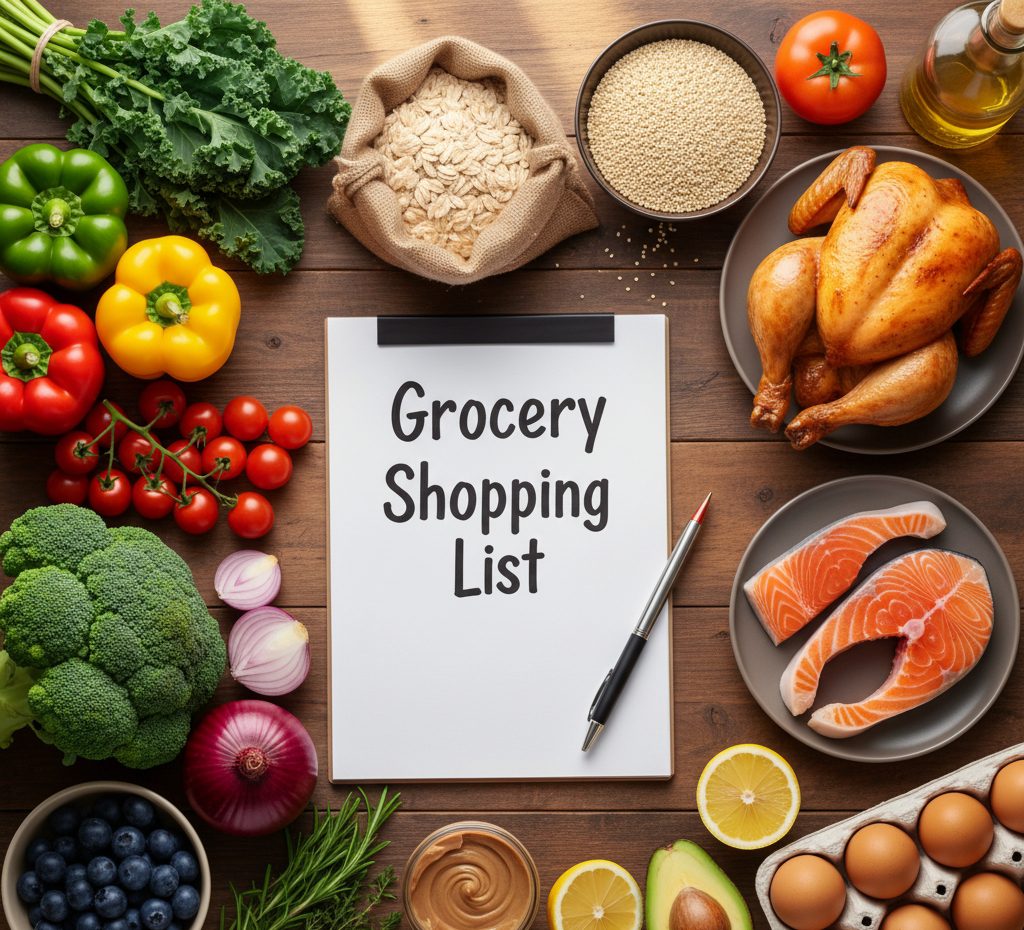
Sample grocery list to pair with your 7 day meal plan.
Once you know your plan, make a grocery list that supports it. A good list helps you avoid impulse buys. Build it around:
- Lean proteins (chicken breast, fish, beans, tofu)
- Whole grains (brown rice, quinoa, whole grain pasta)
- Vegetables and fruits (fresh, frozen, or canned without added sugar or salt)
- Healthy fats (avocado, olive oil, nuts, seeds)
- Smart snacks (Greek yogurt, hummus with veggies, whole fruit)
Studies show that meal plans succeed when the environment supports them. So buy only what you need and keep problem foods out of the house.
Your 7 Day Nutrition Plan (Meal Ideas and Structure)
Use this as a blueprint. Adjust portions to match your calorie target. You can calculate your BMI first, then use that with your calorie goal inside NutriFitCalc Nutrition Tracker.
Day 1
- Breakfast: Oatmeal with berries, almond butter and chia seeds
- Lunch: Grilled chicken salad with greens, tomatoes, chickpeas and olive oil lemon dressing
- Dinner: Baked salmon, steamed broccoli and sweet potato mash
- Snack: Apple slices and a handful of walnuts
Day 2
- Breakfast: Greek yogurt parfait with whole grain granola, banana and honey
- Lunch: Whole grain wrap with turkey, spinach, hummus and carrot sticks
- Dinner: Stir fried tofu with mixed vegetables and brown rice
- Snack: Carrot sticks with hummus
Day 3
- Breakfast: Smoothie with oat milk, berries, spinach, protein powder (optional)
- Lunch: Quinoa salad with kidney beans, bell peppers, cucumber and feta
- Dinner: Lean beef or lentil chili with cauliflower rice
- Snack: A small bowl of mixed nuts
Day 4
- Breakfast: Avocado toast on whole grain bread with a poached egg
- Lunch: Lentil soup with whole grain roll and side salad
- Dinner: Grilled shrimp skewers with mixed vegetables and wild rice
- Snack: Greek yogurt with a little maple syrup
Day 5
- Breakfast: Cottage cheese with pineapple and sunflower seeds
- Lunch: Chickpea and spinach curry with quinoa
- Dinner: Roast chicken thigh, asparagus, roasted potatoes (moderate portion)
- Snack: Pear and a slice of low fat cheese
Day 6
- Breakfast: Whole grain pancakes with strawberries and a little maple syrup
- Lunch: Tuna salad with lettuce, cucumber, olives, olive oil and vinegar
- Dinner: Vegetarian stuffed peppers with beans, lentils, brown rice and spices
- Snack: Sliced cucumber with tzatziki
Day 7
- Breakfast: Scrambled eggs with spinach, mushrooms and whole grain toast
- Lunch: Grilled veggie and halloumi salad with quinoa
- Dinner: Seared fish fillet, green beans almondine, roasted sweet potato
- Snack: Berries with dark chocolate shavings
Tip: Adjust portion sizes and snacks based on your calorie needs and activity level. To estimate your calories, use the Calorie Calculator or browse other tools in Calculator Guides.
Tools and Tips to Maximise Your Week
Track Your Meals and Adjust
Even with the best plan, life happens. Use a simple journal or an app like MyFitnessPal to log what you eat and how hungry you feel. Tracking increases success.
Prep Ahead and Batch Cook
Pick one day to chop veggies, cook proteins and pre portion meals. This removes the what should I eat problem.
Focus On Whole Foods, Not Diet Fads
Diets rich in vegetables, whole grains, legumes and lean proteins are sustainable. Avoid ultra processed snacks even if they fit your calories.
Stay Flexible and Kind to Yourself
If you miss a meal or eat something off plan, do not quit. Get back to the plan with the next meal. Progress is better than perfection.
Link Your Diet With Activity
If your goal is weight loss, combine your meal plan with movement. You can estimate calories burned using the Calories Burned Calculator.
How This Plan Helps You Long Term
A 7 day personalized nutrition plan is more than a short term fix. It teaches habit. When you practice meal planning, balanced plates, grocery lists and tracking, you create a system you can repeat every week.
- Reduces impulse eating
- Makes grocery shopping easier and cheaper
- Keeps your nutrients covered
- Keeps calories more consistent
- Lines up with expert nutrition guidance
What To Do Right Now (Your Action Steps)
- Open your notes or print a blank weekly planner.
- Use the sample plan above and pick foods that match your culture and taste.
- Write a grocery shopping list that matches your chosen meals.
- Batch prep at least two dinners and one lunch.
- At the end of the week, review what worked and adjust the next week.
This simple sequence turns intention into results.
Frequently Asked Questions
No. If you choose real foods, balance your plate and stay close to your energy needs, you will stay on track. Precise counting is useful for special health conditions or faster fat loss, but it is not always essential. For more accuracy, you can check your BMI here BMI Calculator.
Yes. Repeating meals saves time and money and makes shopping easier. Just make sure the whole week still looks balanced.
You can follow the same structure and swap animal proteins for plant sources like beans, lentils, tofu, tempeh and quinoa. Keep variety so you cover protein, iron and B vitamins.
Control portions, choose high fiber and high protein meals, reduce ultra processed foods and create a small calorie deficit. For health conditions or very low calorie diets, talk to your doctor or a registered dietitian first. You can also track progress with the Body Fat Calculator.
Thank you for reading. If this was helpful, explore the ready to use meal planning tools and calculators at NutriFitCalc and make this 7 day nutrition plan your weekly routine.